

Velociraptor’s cousin flew like a flying squirrel

The Changma Basin in northwest China’s Gansu province is famous for its many ancient bird fossils. Or, at least, pieces of fossils. Paleontologists have documented over 100 prehistoric avian dinosaur remains buried across the region, many resembling the digestive pellets regurgitated by owls living today. For years, researchers suspected that a similar predator was responsible for the fossil fragments, but lacked a convincing candidate.
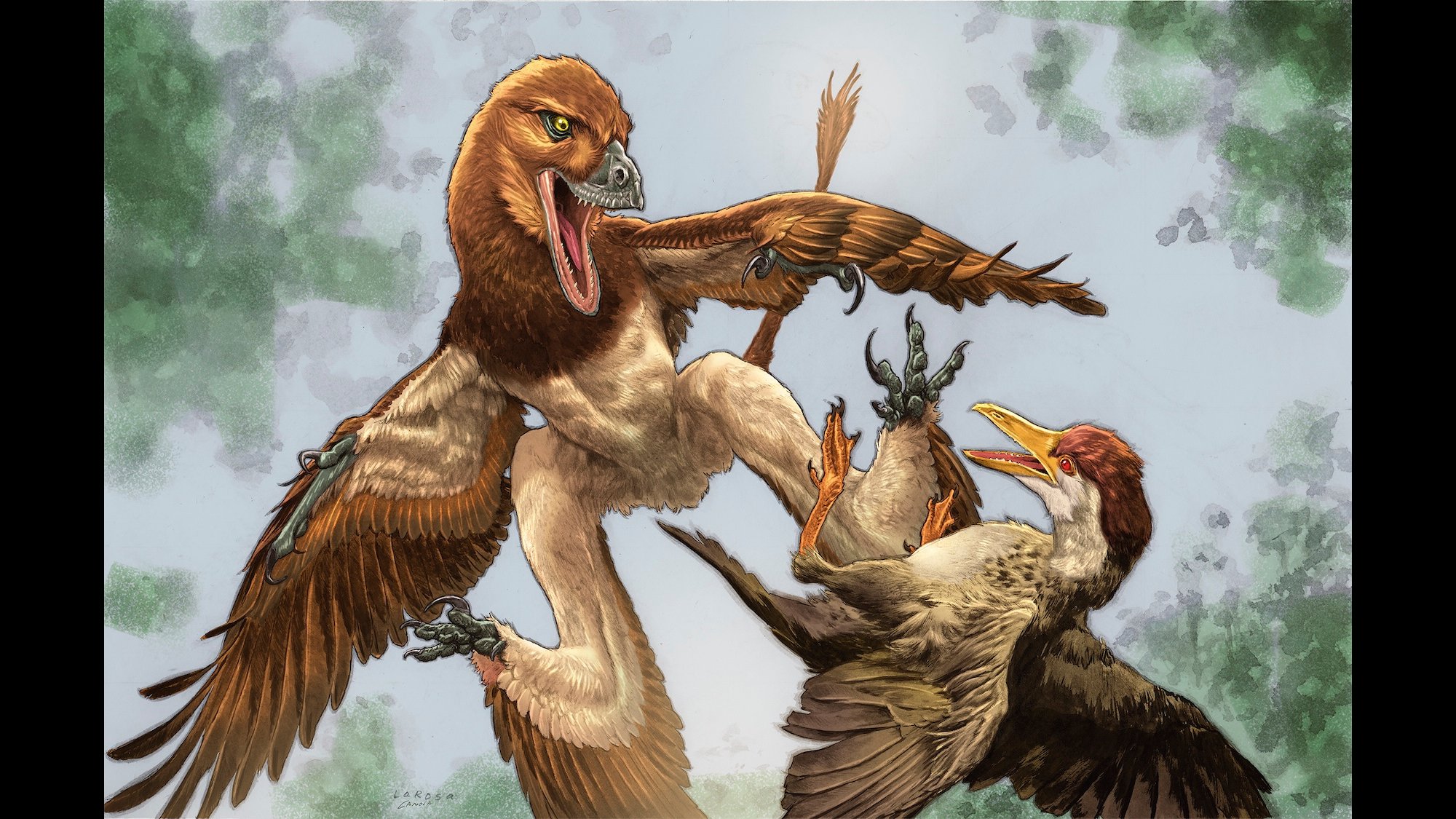
Experts now have a plausible suspect. According to a study published today in the Annals of Carnegie Museum, a cousin of the fearsome Velociraptor stalked the Changma Basin around 120 million years ago. But with its long feathers and four “wings,” Jian changmaensis didn’t ambush its prey from high in the air like a falcon. Instead, it more likely swooped in like a flying squirrel.
“It’s the only dinosaur found at this site that wasn’t a bird, it was a carnivore, and it was much bigger than everything else that we’ve found there,” Jingmai O’Connor, a study co-author and Field Museum associate curator of fossil reptiles, explained in a statement.

Named after a winged mythological creature from Chinese folklore, J. changmaensis belongs to a dinosaur subgroup known as microraptors. These feathered predators were speedy and small, often only about the size of a crow. J. changmaensis was comparatively large, however. While O’Connor’s team has so far only recovered a portion of its upper arm, they believe the dinosaur likely featured a roughly four-foot wingspan. That puts it at about the size of a barn owl.
Although larger than its fellow microraptors, paleontologists believe J. changmaensis physically resembled its relatives. This means the dinosaur likely featured both forearm wings as well as rudimentary “wings” on its hind legs. Microraptors couldn’t soar through the skies, but their feathers served a purpose
“Jian and the other microraptors probably weren’t capable of true, powered flight, but they could probably glide like a flying squirrel,” explained O’Connor.
Matt Lamanna, a study co-author and Carnegie Museum’s curator of vertebrate paleontology, said the team’s discovery offers “critical new insight” into the Changma region’s biological history while helping contextualize today’s avian dinosaur descendents.
“For decades, the Changma site has been renowned among paleontologists for its extraordinary bird fossils,” Lamanna added. “Now, with the discovery of Jian, we finally know what was eating them.”
The post Velociraptor’s cousin flew like a flying squirrel appeared first on Popular Science.
What's Your Reaction?
 Like
0
Like
0
 Dislike
0
Dislike
0
 Love
0
Love
0
 Funny
0
Funny
0
 Wow
0
Wow
0
 Sad
0
Sad
0
 Angry
0
Angry
0





Comments (0)